



.svg)
Walkout Basement Ideas Toronto
A walkout basement is a structural investment in grading and light, not a cosmetic renovation. Most homeowners in the GTA recognize the rental...
12 min read
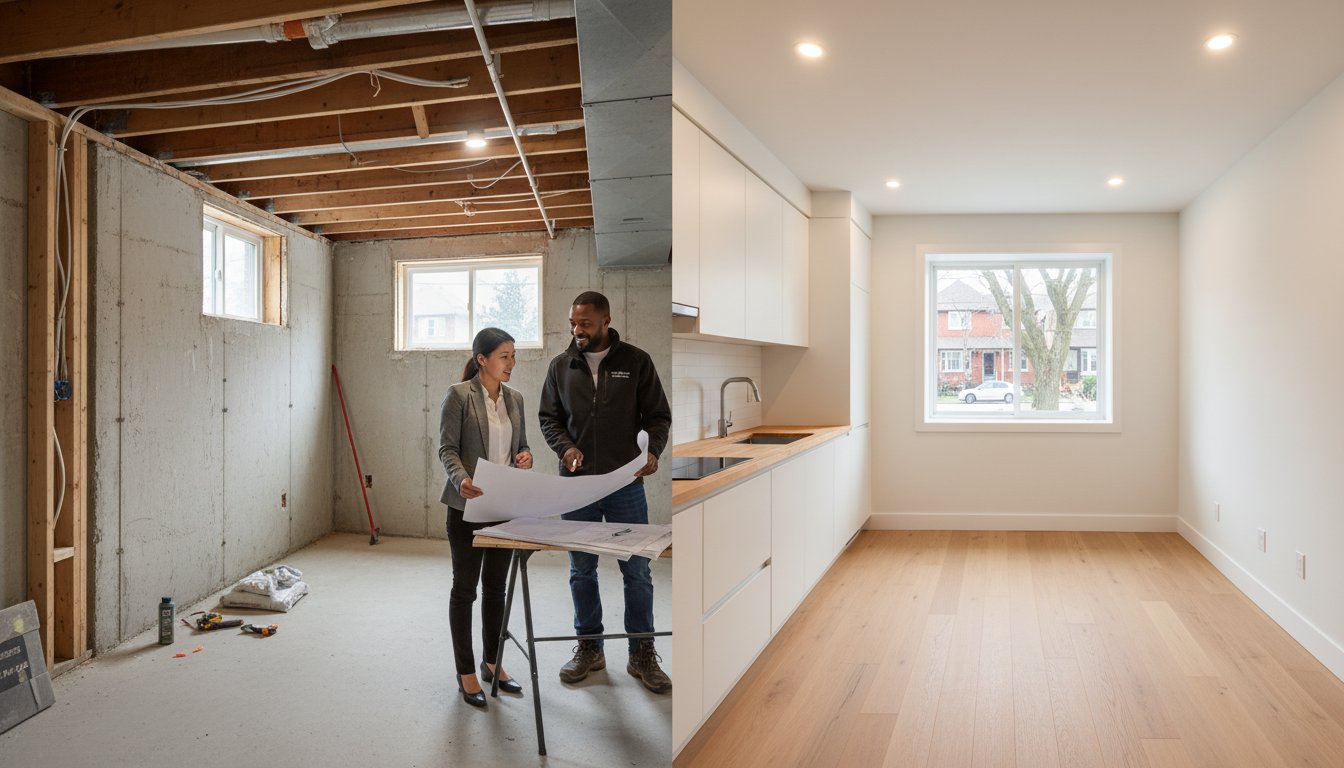
Most Toronto homeowners are sitting on a financial time bomb because their secondary suites fail to meet the city's rigid safety standards. It's a harsh reality that an inspector can shut down your rental income overnight if you've missed a single fire code or ceiling height requirement. We understand that the legal basement apartment requirements Toronto mandates are often confusing; they're buried in technical jargon that many contractors can't even explain clearly. You're right to worry about hidden costs and conflicting building codes in areas like Scarborough or North York that seem to change every season.
We believe in structural logic over guesswork. This article provides the no-nonsense breakdown you need to ensure your conversion is fully compliant by 2026 standards, protecting your investment from the start. We'll outline the specific permits, fire separations, and structural minimums required to pass your inspections in the GTA the first time. You'll get a clear roadmap to legal compliance and the predictability you need to build a suite that actually pays for itself without the fear of city fines. By the end of this guide, you'll know exactly how to turn your basement into a legitimate, income-generating asset.
Zoning By-law 569-2013 governs every legal basement apartment project in Toronto. If your property doesn't meet these specific use requirements, your renovation is dead before the first stud is placed. We start every project by verifying your land use to ensure your home is zoned for a secondary suite. This initial check prevents you from wasting thousands on designs for a unit the city will never approve.
To better understand this concept, watch this helpful video:
Understanding What is a Secondary Suite? helps you avoid the "lodging house" trap. A secondary suite is a self-contained unit with its own kitchen and bathroom located within a single-family home. A lodging house involves renting individual rooms to multiple people, which triggers much stricter fire codes and different zoning rules. We never start a project in Oshawa or Whitby without a local permit search. This search reveals hidden work orders or previous illegal builds that could tank your investment. Building without a permit leads to work-stop orders, municipal fines, and insurance denials. It's a risk that costs more than the permit itself.
Bill 23 has simplified the path for additional residential units (ARUs), but local nuances remain. In Ajax and Pickering, parking is the most common hurdle for legal basement apartment requirements Toronto homeowners face when moving to the suburbs. You generally need a dedicated parking spot for the tenant that doesn't rely on "tandem" parking. We also debunk the "grandfathering" myth daily. For 2026 projects, a basement is only legal if it has a record of compliance. If you can't prove it was legal decades ago, you must meet today's standards.
The City of Toronto currently sees average permit wait times of 8 to 12 weeks for 2026 approvals. To get through the queue, you need professional site plans, floor plans, and elevation drawings. We handle all the permitting paperwork because we know exactly what examiners look for. This prevents the months of back-and-forth that stall most DIY applications. We don't let your project sit in a bureaucratic black hole.
Our process begins with a $697 Basement Feasibility Assessment. This fee is credited back if you move forward. It's how we ensure your project makes financial and structural sense before you commit. Every BCR project is backed by our BCR Promise. This includes a Fixed-Price Guarantee to eliminate surprise invoices and an On-Time Guarantee where we pay you C$1,000 for every week we are late. We also provide a 7-year Defect-Free Guarantee for your peace of mind. We prioritize your long-term investment over a quick sale.
Book a free Planning Call at bcrdesignbuild.com.
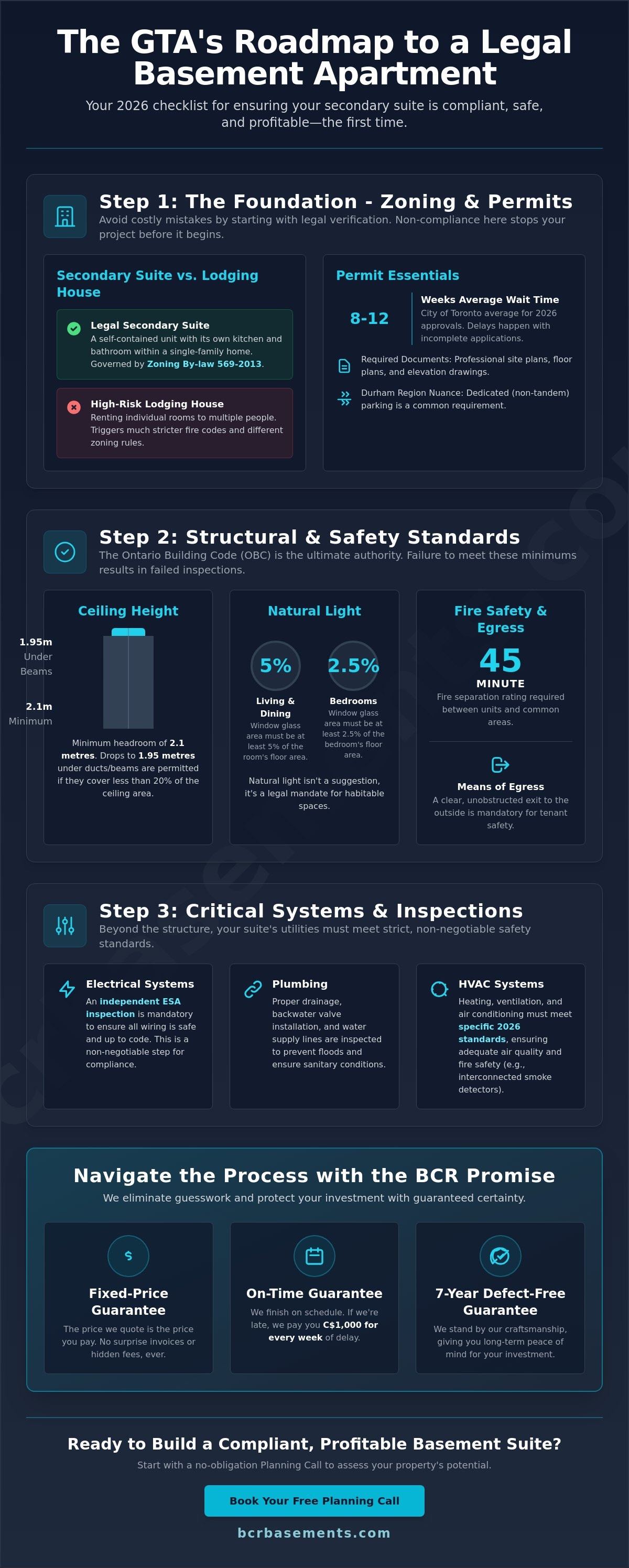
Fire safety is the most critical hurdle in meeting legal basement apartment requirements Toronto inspectors demand. We don't view these rules as red tape; we view them as life-saving infrastructure. The "Means of Egress" is your tenant's designated path to safety. This path must be unobstructed and lead directly to the outside. If a fire starts in the kitchen, your tenant needs a clear, protected route to exit the building without passing through the area of origin. This is a fundamental requirement for every legal suite we build in Toronto and the Durham Region.
We use 5/8-inch Type X drywall for all GTA legal suite conversions. Standard drywall does not provide the necessary protection. The Ontario Building Code requires a fire separation between the basement and the main floor. This usually translates to a 30-minute or 45-minute fire-resistance rating depending on the age of the home. We prioritize the 45-minute standard to ensure maximum safety and peace of mind. You also need interconnected smoke and carbon monoxide alarms. When one alarm detects a threat in the basement, every alarm in the house sounds. This "hear one, hear all" system is a non-negotiable legal requirement.
Every bedroom in a legal suite must have a secondary exit. This means an egress window with a minimum opening area of 0.35 square metres. No single dimension can be less than 380mm. You must be able to open the window fully without using tools or removing hardware. If the window opens into a window well, that well must extend at least 760mm from the window to allow for a quick escape. Proper drainage in these wells is essential to prevent basement flooding during heavy Southern Ontario rainstorms.
Shared entrances require specific fire containment measures. We install solid wood or 20-minute fire-rated doors equipped with self-closing devices. These doors must close and latch on their own to stop smoke and flames from spreading between units. If your basement shares an HVAC system with the upper floor, we install fire dampers in the ductwork. These dampers automatically shut when they detect high heat. We verify these mechanical details during our $697 Basement Feasibility Assessment to ensure your project stays on track. Every project is backed by our BCR Promise, including a Fixed-Price Guarantee that eliminates financial guesswork.
Ready to start your project? Book a free Planning Call at bcrdesignbuild.com or use the Basement Cost Calculator at bcrdesignbuild.com.
Hidden mechanical systems are where most unpermitted projects fail during the transition to legality. Meeting the legal basement apartment requirements Toronto mandates involves more than just adding a few outlets. You're essentially doubling the demand on your home’s core infrastructure. We don't look at these systems as optional upgrades; they're the functional heart of a safe rental suite.
Electrical Safety Authority (ESA) inspections are entirely separate from your City of Toronto building permits. The city inspector reviews the structure and fire separation, but only an ESA inspector can certify your wiring. We coordinate both because a city permit doesn't cover your electrical safety. You need both certificates to be fully compliant and insured. Without that ESA sticker, your insurance provider has every reason to deny a claim if a fire occurs.
We recommend installing a secondary electrical panel inside the basement suite. It's a matter of logic and privacy. If a tenant trips a breaker at 11 PM, they shouldn't need to enter your personal laundry room to reset it. It also simplifies future sub-metering if you decide to split the hydro bills between households.
Most older homes in Scarborough, East York, or Etobicoke still run on 100-amp service. This is rarely enough for two kitchens and two laundry sets running simultaneously. We evaluate your total load during our initial planning phase. Upgrading to 200-amp service in the GTA currently costs between C$4,500 and C$6,500. This price includes the permit, the new mast, and the panel itself. We don't provide vague guesses on these costs. Our Fixed-Price Guarantee ensures the number we give you is the number you pay.
Sharing a furnace is legal in 2026, but it requires specific fire dampers in the ductwork to prevent smoke from moving between units during an emergency. While legal, sharing air often leads to tenant complaints about cooking smells or noise. We often suggest installing ductless mini-splits or electric baseboards as secondary heat sources. This allows for independent thermostat controls, which is a major draw for high-quality tenants in Pickering or Ajax who value comfort.
Modern air quality standards also require a Heat Recovery Ventilator (HRV). This system pulls stale air out of the basement and brings fresh air in without losing your heat. It’s a requirement for new suites to prevent the damp "basement smell" and moisture build-up. We verify these ventilation needs during our Basement Feasibility Assessment to ensure your budget accounts for these mechanical realities before we ever swing a hammer. This protects your investment from the start.
Don't risk your investment on a contractor who guesses at your mechanical needs. Book a free 20-minute Planning Call at bcrdesignbuild.com to start your project with certainty.
We don't start your project with a guess. Most contractors walk through a space and throw out a random number to win the job. We find that approach reckless. We begin every project with a Paid Basement Feasibility Assessment for C$697. This assessment identifies the structural and zoning realities of your specific property in the GTA. If you choose to move forward with us, we credit that C$697 back to your project. It is a necessary step to ensure your home can actually meet the legal basement apartment requirements Toronto inspectors enforce before you commit to a full build.
The BCR Promise eliminates the financial anxiety common in the renovation industry. Our Fixed-Price Guarantee means the price on your contract is the final price. We don't send surprise invoices for "unforeseen" issues. We also stand by our timelines. Our On-Time Guarantee dictates that if we miss your project deadline, we pay you C$1,000 for every week we are late. This puts the risk on us, where it belongs, and ensures your rental income starts when you expect it to.
A legal conversion in the Toronto market is a major investment. You should expect a price range between C$85,000 and C$140,000 or more depending on the current state of your home. This budget covers professional architectural drawings, city permit fees, and the specialized labour required for fire separation and separate entrances. Cheap quotes are often a warning sign. Low-cost contractors frequently skip essential steps, which leads to failed inspections and double the work later. A fully legal suite in areas like Scarborough or North York drastically increases your property value and provides a secure, high-yield asset for your portfolio.
Landlords need long-term certainty. We provide a 7-year Defect-Free Guarantee to ensure your investment remains profitable and maintenance-free for years. We don't just build a space; we build a compliant income stream. If you are ready to plan your 2026 budget with precision, use the Basement Cost Calculator at bcrdesignbuild.com.
If you want to discuss the feasibility of a project in Oshawa, Whitby, or anywhere across the Durham Region, book a free Planning Call at bcrdesignbuild.com. We will spend 20 minutes reviewing your goals and the specific constraints of your property. We value your time and your budget. Let's look at the data before you pick up a sledgehammer.
Toronto's rental market is lucrative, but cutting corners on building codes is a recipe for financial disaster. Meeting the legal basement apartment requirements Toronto demands requires a meticulous approach to fire separations, egress windows, and structural integrity. We've spent over 15 years navigating these specific GTA regulations so you don't have to guess if your project is compliant or safe.
Most contractors offer vague estimates that balloon once the city inspector arrives. We don't operate that way. Our BCR Triple Guarantee provides a Fixed-Price, an On-Time completion penalty of $1,000 per week, and a seven-year Defect-Free warranty. With a 4.7-star rating from 43 verified Google reviews, we prioritize your long-term equity over a quick sale. We focus on structural logic and financial predictability to protect your budget and your peace of mind.
The path to a legal suite starts with a strategy, not a sledgehammer. We help you determine if your project is feasible before you commit your life savings. Book a free 20-minute Planning Call at bcrdesignbuild.com to discuss your goals. We're ready to help you build a secondary suite that is fully compliant and built to last.
Converting a space into a legal basement apartment in Toronto typically costs between C$80,000 and C$150,000 by 2026 standards. These figures fluctuate based on structural needs like underpinning, egress windows, and fire separation. We don't guess at these numbers or offer vague estimates. Our C$697 Basement Feasibility Assessment provides a detailed breakdown before you commit, ensuring your project follows our Fixed-Price Guarantee so you never see a surprise invoice.
You can build a legal suite if your ceilings are at least 1950mm, which is about 6'5", over 75 percent of the required floor area. If your height is lower than this Ontario Building Code minimum, we often recommend underpinning or benching the foundation to create a functional, legal space. Lower ceilings reduce your rental value and property appeal. We focus on structural logic to ensure your investment actually makes financial sense before we start digging.
A separate entrance is mandatory for any legal basement apartment in the GTA to meet fire safety and egress requirements. This entrance must provide a direct path to the exterior without passing through the main dwelling area. It's a non-negotiable safety feature that protects your tenants and your liability. We integrate these entrances into your home's structure while maintaining the aesthetic integrity of your property and ensuring full compliance with local bylaws.
Getting caught with an illegal basement apartment in Oshawa can result in fines up to C$50,000 for individuals and C$100,000 for corporations under the Provincial Offences Act. The city can also issue a "work without permit" order, forcing you to evict tenants immediately and decommission the suite at your own expense. This financial risk isn't worth the shortcut. We ensure every project meets legal basement apartment requirements Toronto and Durham Region standards to protect your long-term investment.
The permit process for a basement apartment in Toronto currently takes between 3 and 6 months from the initial submission to final approval. This timeline depends on the complexity of your architectural plans and the current backlog at the City of Toronto building department. We manage this timeline aggressively to keep your project on track. Our On-Time Guarantee means we pay you C$1,000 for every week we're late once construction begins.
You don't strictly need a separate furnace, but you must provide a fire-rated separation and smoke dampers in the shared ductwork to prevent the spread of fire and smoke. Many homeowners choose to install a separate HVAC system or electric baseboard heating to give tenants independent climate control. This reduces noise transfer and eliminates common tenant complaints. We evaluate your existing mechanical systems during our initial assessment to determine the most cost-effective path forward.
A legal basement apartment will likely increase your property taxes because the Municipal Property Assessment Corporation (MPAC) views the added living space as an increase in property value. Expect an adjustment once the city closes the permits and notifies MPAC of the change in use. While your taxes go up, the legal status allows you to command higher rent and significantly increases your home's resale value. It's a logical trade-off for a structured, income-generating asset.
A legal basement apartment is a self-contained second dwelling unit with its own kitchen, bathroom, and private entrance that meets all Ontario Building Code requirements. An in-law suite is typically just extra living space for family members and lacks the legal zoning or fire separations to be rented to the public. Converting an in-law suite into a legal unit requires specific fire-rated drywall and independent exits. We help you navigate these legal distinctions to ensure your renovation is fully compliant.
A walkout basement is a structural investment in grading and light, not a cosmetic renovation. Most homeowners in the GTA recognize the rental...
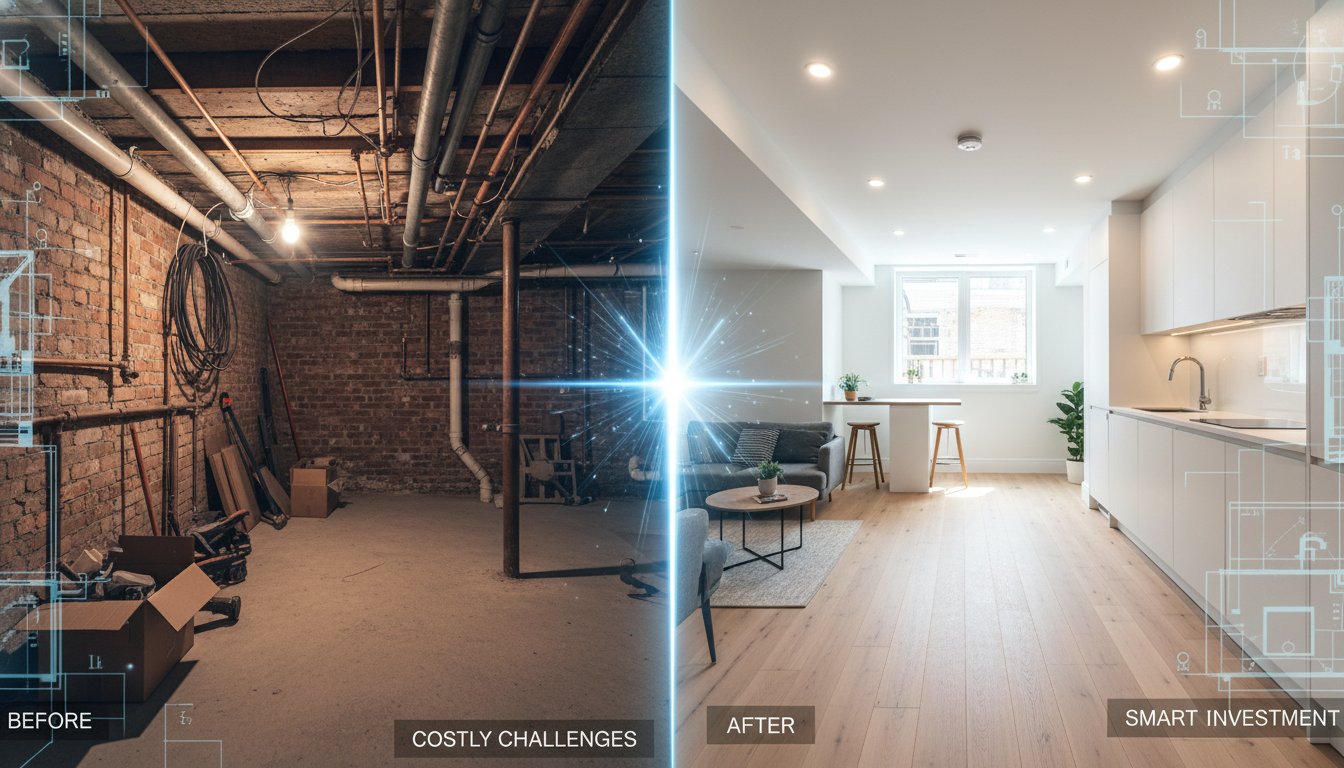
A "cheap" quote is the most expensive mistake you can make when building a secondary suite in the GTA. You already realize that a rental unit is the...
Most basement quotes in the GTA are designed to get a foot in the door, not to finish the job. We know the cost to complete basement renovations in...